
Monday,11,2019
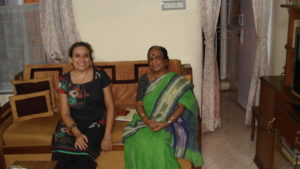 Prof. Pranati Dutta Gupta taught at Vivekananda College, Thakurpukur, Kolkata.
Interviewed by Dr. Paromita Chakravarti and Sri Abhishek Sarkar.
Year of passing B.A. and M.A.
B.A. in 1964, M.A. in 1966 (English) and 1968 (Comparative Literature) and Ph.D in 1975.
Details of institutions concerned.
I went to Jogomaya Devi College for my undergraduate degree. I was, however, taught by stalwarts like Amalendu Gupta, Sadhan Ghosh, Amulyadhan Mukhopadhyay among others. After completing my Masters in English from Calcutta University, I applied to Jadavpur University for a Masters in Comparative Literature. My Ph.D was on the impact of western literature in the works of Bibhutihushan Bandopadhyay and Manik Bandopadhyay.
When did your first encounter with Shakespeare take place (at school or college)?
I went to Murali Dhar Girls High School. When I was in Class VIII or IX, I think, I first came across Shakespeare. Then, there were performances in school as well. I didn’t know Shakespeare well, but I was familiar with him, certainly.
College and university syllabi (Shakespeare plays and poems).
There was Hamlet and Julius Caesar, I remember, in the B.A. level. I do not remember the others. At the M.A. level, we had a whole paper on Shakespeare. And then, we had separate sections on detailed and non-detailed study of Shakespeare. I don’t remember which plays were there. There were four plays in the detailed section, one of which was taught by Amalendu-babu. During my second M.A. in Comparative Literature too, we had Shakespeare as part of a course titled ‘Romantic Drama from Shakespeare to Victorian Age’. I studied Hamlet as a part of this course once again.
Who taught the texts in question?
Amulyadhan-babu taught us Hamlet, and I don’t really remember which plays Sadhan-babu taught us. Leela Maitra taught us Julius Caesar. She was very kind and motherly, but her teaching was nothing special. Dilip Mustafi would sometimes come to teach us as well. From what I remember, Jyoti-babu and Amalendu-babu taught us Shakespeare at the M.A. Level. Ramesh-da taught us Shakespeare in the Department of Comparative Literature at Jadavpur. He taught us Hamlet, and David Macker taught us Midsummer Night’s Dream.
What techniques were used (e.g., close reading, lecture demonstration, group discussion, seminars etc) for teaching Shakespeare?
It was always just reading from the text and paraphrasing it. Dilip Mustafi would sometimes engage in play-reading in class with the students. Amalendu-babu, Jyoti-babu and Ramesh-da all did dramatic readings of the play.
What traits of any particular teacher impressed you most?
While all of them read the plays as texts and not as something that was meant to be staged, Amalendu-babu did emphasize on exits and entrances in the play a lot, which indicated that he did treat it as a performative text. He and Jyoti-babu both read the play with some amount of drama. Jyoti-babu in particular was very good at reading the text out. Ramesh-da, while teaching us Hamlet in the Masters level at JU would deliver the dialogues with so much feeling that it would immerse us in the play.
Was the teacher very particular about pronunciation and accent?
I don’t really remember this, but I don’t think so.
Did the teacher refer to literature in other languages while discussing Shakespeare? For example, would the teacher mention Dante, Kalidasa or Tagore while reading Shakespeare with the students?
Jyoti-babu, aside from reading the text very critically, would draw intertextual parallels between Shakespeare and Sanskrit plays. In the Comparative course, parallels would be drawn between Shakespeare and Goethe’s works.
Were expletives and sexual references omitted?
No, those would be bypassed.
Were Shakespeare’s contemporary dramatists given the same amount of importance in the classroom?
The Marlowe-Shakespeare controversy was often referred to in the M.A. level: the fact that Marlowe may have written the plays. They didn’t believe in it, but would often refer to this.
Editions and critical material prescribed and used.
In our B.A. classes, the professors never recommended any books or critical materials. No edition was specified, but we read the Verity edition on our own. We went to the British Council and found out what books to read - Dover Wilson, for example. In the M.A. level, we read the Arden edition. There was a reading list which had the reference material on it. Professors did not refer to any other books on their own.
Examination and question pattern.
I don’t really remember the questions.
Whether the text was related to performance conventions.
Not really. In the Comparative Literature department, yes, a little, but not elsewhere.
Whether there was any performance of Shakespeare at the institution.
Not that I can recall in the B.A. level. We would have Rabindranath’s plays instead. In the M.A. level at Jadavpur, there were productions of the English Department which were staged at Gandhi Bhavan. We’d all go to see that. There was an active performance tradition in the English Department thanks to Sheila-di and Debabrata-babu, and more recently, Ananda (Lal).
Other productions or films.
My friends and I had gone to see Orson Welles’ Macbeth at Light House. The professors hadn’t recommended this, mind you. We did it on our own. I remember greatly enjoying it. Group theatre was very big back then, but they did not do Shakespeare all that much. I did see Sher Afghan, which is supposed to be adapted from Richard II.
Account of classmates who later distinguished themselves as teachers, performers etc.
My contemporaries Sushmita and Anuradha went on to teach Shakespeare. There is also Aloka-di.
Noticeable changes in Shakespeare pedagogy and student reaction over the decades.
Recently, the background and context of the play have become important. We gradually moved away from the extremely text-oriented study. Films and other productions are also referred to now, which definitely garners more interest. However, this is not always possible because of infrastructural issues. Students at Jadavpur do not do a kind of question-oriented study. They do not attend tuitions. This is a very good thing. But sadly, this is not the case everywhere. The children these days are moving away from Shakespeare. Indeed, they have moved away from English and even American literatures and are working on postcolonial literatures.