
Monday,11,2019
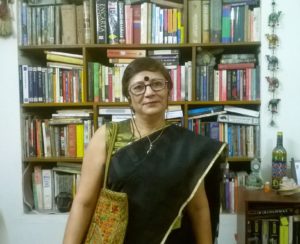
Late Professor of Kalyani University.
Interviewed by Arunava Bnerjee.
Could you tell us about your B.A. and M.A. degrees and the concerned dates and institutions?
I did both my B.A. in 1977 and my M.A. in 1979 from JU. The results were delayed until the end of 1980. My M.Phil and Ph.D are also from JU.
When did your first encounter with Shakespeare take place?
My first encounter with Shakespeare took place at home in Bengali. Deb Sahitya Kuthir had two small books, Shakespearer Comedy and Shakespearer Tragedy which my parents must have bought for me. I remember how I liked the story of As You Like It and The Winter’s Tale. It was in Bengali and in the form of a story. I later heard that Manabendra Bandyopadhyay, who used to teach in the Comparative Literature Department, used to publish such books anonymously. I think he had just graduated, but I am not very sure. That was my first encounter with Shakespeare.
My school was Sacred Heart Convent in Jamshedpur; they had class libraries from Class 4. There was a central library when we moved up to high school. They used to keep age-appropriate books in the class libraries. At that point of time we got to read abridged versions of the plays in a play format during Classes 6, 7 and 8. And since I had previously read them in Bengali, I already had an interest in them. I would pick them up and read them. By Classes 7 or 8 we started reading full plays because they were available in our library. And of course we had Macbeth for our ISC, which ended at Class 11; we didn’t have class 10 or 12. The official encounter was in class 10 and 11. But I had an awareness of the stories behind the plays. By Classes 6/7 we were reading abridged versions.
Who were the people who taught Shakespeare and how was it taught?
At the B.A. level... let me first start with the Pass Course. They didn’t offer Hindi, and since I had learnt Hindi in school, thus I had to take alternative English where we had to study Othello. And to our great surprise, it was allotted to someone who was associated with Old English, Ramaprasad-babu. He used to teach in a very methodical manner, and he didn’t teach much, just whatever was required for the examinations. So that was very helpful for us. By that time we were reading the texts in a lot of detail for our Honours papers. So he put the entirety of Othello into two lectures in a comprehensive manner. Our main teaching system, where Dinesh-babu or Jaganath-babu or Mihir-da, used to teach a text in great detail, and this contrasting way of teaching Othello in just two classes, that just pointed out certain things, provided us with the idea that there can be an overview from which you can work in detail on your own. So that was a different style of teaching for our Alternative English which we didn’t get for our main degree. At the undergraduate level we had As You Like It. There was a tragedy which was not Lear or Hamlet, so it could be Macbeth again. I don’t remember clearly. Perhaps Amlan would remember, but he wasn’t there for the B.A., but what I do remember is Dinesh Chandra Biswas’s teaching style. The performance of his enjoyment of Shakespeare was what we enjoyed the most in class. Not so much as to what he said, or the nuggets of wisdom that he gave but rather his performance of his love for Shakespeare. He was bringing in a reference to the counting house in The Merchant of Venice, and then he started enacting. He was very dark, he had a round face, and we would compare him to an appropriate sweet in Bengali – we used to call him pantua sir, and he used to wear white panjabi’s. He used to take snuff in a manner such that one of his nostrils was slightly up and the other was slightly down. There was some chalk and a duster and he demonstrated how to count, while wiggling his body and we all laughed at it, but it was fun. I don’t remember whether he gave us any insightful talks on Shakespeare. It was more of a performance that we enjoyed, so much so that we even created this myth that while he was talking about Rosalind, he left the class and ran into the corridor and proclaimed ‘O Rosalind’. He did say, ‘O Rosalind, My Rosalind’ in class and we added the ‘corridor bit’ to it. But somewhere along the way he infected us with the possibility of falling in love with Shakespeare. So that I think was very important. And Jagannath-babu, I remember that he taught us King Lear for M.A., and later Mihir-babu taught us Lear as well, and these were two very contrasting styles, because Jagannath-babu never taught us beyond Act 1 Scene 1. His class was rather infrequent and he would always talk about the first scene, the performance of the scene and he would always talk about a ladder and that is all that I remember. Because this went on for a long time, Mihir-babu taught us Lear, and that was an eye-opener, in fact Mihir-da started making us think about Shakespeare in a different way, and he talked about property relations, and this was in the seventies, before Dollimore was to talk about it later. About the kind of political interests that are there and the tension between the three daughters because of that political interest, he also talked about the have-nots and Lear being de-classed. And this was a totally new way of approaching Shakespeare which we had no idea of and suddenly a whole new world had opened up before me, and I started finding Shakespeare much more interesting, going into Shakespeare and getting something out of it which I hadn’t previously noticed. It was a kind of eye-opener which was done primarily by Mihir-da. At that time we did not have Sukanta-da or Supriya-di teaching, it was before they came. It was these three people primarily. The love for Shakespeare showed with Dinesh-babu. In our classes, you won’t find love, the teaching is more workman like, transacting a text, but they were into Shakespeare. That was something extraordinary.
What traits of any particular teacher impressed you the most?
I would have to say that it was Mihir-da’s way of teaching that impressed me the most, because many of the teachers, like Mihir-da brought in the history and the context of the play. For example Mihir-da brought in some paintings of that time to show why the prince is such an important figure in Shakespearean tragedy, the idea which was dinned in by Mihir-da was that you cannot understand literature if you don’t understand the context, and that you cannot understand the context without understanding its literature. So this idea that understanding Shakespeare was a relational affair, was something that he taught us. And other teachers who taught other texts also taught us the same idea that actually paid rich dividends later. What Mihir-da along with other teachers did unconsciously was to encourage us to explore beyond the text. Of course unlike today we did read the text. And it was an opportunity for our group to slack-off. There were 6-7 people in it, and we would read the text very thoroughly. And each of us would read one book of criticism or something that was doing the rounds and was much in vogue. We would all sit at A.C. canteen sipping 10 paisa’s worth of tea and we would all say that this was the summary of our respective theoretical books that we had read. So we would have six perspectives there and we would discuss the texts very thoroughly and that was our idea of the texts which we would then subsequently transfer on to paper. This idea of going beyond the text to look for interesting pictures, or films or adaptations made Shakespeare come alive for us. I remember Kitty Dutta arranged for us to go and see American Hamlet along with Rosencrantz and Guildenstern are Dead. There were film shows as well to which we were taken from Jadavpur to watch. And the amount of seminars... we didn’t understand half of what was being said, but we went to many, and laterally they served their purpose when we started doing our research. This kind of openness, going beyond the classroom, going beyond the text, was probably instrumental in our understanding everything, including Shakespeare. So that was very exciting.
Was the teacher particular about pronunciation and accent?
Not the Shakespeare teachers. Were expletives and sexual references omitted? Yes, Dinesh-babu and Jagannath-babu definitely elided them, but Mihir-da would point it out and show how it was politically, patriarchally motivated. He showed us how bawdy and vulgar Shakespeare could be, so we had a healthy appreciation of him without thinking of him as an unchallengeable God. That was not the discipline that was inculcated in us. This was done by other teachers as well, like Jashodhara-di when she was doing Dickens. That you can challenge, that you take your context into account when you relate to Shakespeare. Yes, they were not omitted by this particular teacher, but the other two teachers were more conservative. For Mihir-babu it was never out of the context, and even Dinesh-babu did give us a less complex version of the context, but the context was always stated.
Were Shakespeare’s contemporary dramatists given the same amount of importance in the classroom?
It also depends largely on the syllabus, in the syllabus there were some, but obviously, Shakespeare was the heavy weight. Often Dinesh-babu and Mihir-babu drew parallels with others. To show how Shakespeare was different or was doing something new or was more conservative. I remember when Mihir-da was doing Jonson, he consistently projected Shakespeare against him to show how Jonson was an urban dramatist, very city-centric, and what was the difference between Shakespeare and Jonson. That was done, but by these two teachers.
Were students encouraged to think independently and challenge the teacher?
Yes, definitely so, even if it was something we read and wasn’t related to Shakespeare, and we’d just come across it, and it was disturbing us, we would talk about it, in class but most of our teachers were very accessible. We could even go to their homes to ask them questions and have some good food in the bargain. Definitely this practice of engaging in discussion was there. We were very impressed by Christopher Caudwell’s Illusion and Reality that had just come in the market at that time. There was a brief, tight history of English literature in that, in one chapter, I think chapter 4, and it was framed so nicely that we were very impressed. So we started to talk about it with Mihir-da. Mihir-da talked about its good points, but he took the time out to point out its flaws as well, that it cannot be applied to entire complex patterns, so he gave us a critique of Caudwell while we were being moved by him. Arup-da used to do this as well. And Toto-da also invited such engagements but he never taught Shakespeare. He was also known as Ranajay Karlekar. I have always felt that Jadavpur has given me a legacy. And that is a legacy of goading your students to think beyond the syllabus, really caring for them, I don’t know how much I have been able to carry it on. Toto-da was someone to whom you could go with a literature text, to whom you could go to about the breaking up of love affairs, to whom you could say I have no place to stay, make arrangements for me. He was the most complete teacher. Of course the age difference was critical, we related to him quickly. But I haven’t seen a teacher like him. Malini-di, Mihir-da, Sheila-di, Sajni-di provided a major aura of friendliness and compatibility in the department which encouraged us to be bold with them, sometimes bold beyond our brief. Even Jashodhara-di, without whom I would have never completed my M.Phil. She literally blackmailed me and my husband to complete our M.Phil theses. She told us that she had got special permission for us as we had done a lot when we were students; my thesis was on Shakespeare’s masterless men. She told me that if I didn’t submit this time around, her reputation was at stake. Not for Shakespeare, but for Jashodhara-di, we completed it in that year. If that didn’t happen I wouldn’t have gotten around to doing my Ph.D either. She was instrumental in me completing my M.Phil and Ph.D in a way. I had even told Mihir-da after registration that he should drop me as a student, that I wasn’t capable of doing it. Mihir-da said that I would do it when I would do it, so this was his patience in holding a place for a person who was totally non-productive during the first four years or so. He was responsible for my Ph.D. This enormous generosity on their part and the enormous amount of openness, is difficult to find. They didn’t just teach us about Shakespeare, they taught us how to look at life, without imposing it on us. We learnt how to live our lives at Jadavpur because of the teachers. That was something big that we got. I don’t know if that still happens nowadays.
Editions and critical materials prescribed and used?
In those days there was no Norton, so usually we were asked to take recourse to Arden. We were also told to look at old Oxford ones, we were alerted to the fact that the line alignments were not the same with the Cambridge editions. The point was that all the important foreign editions were prescribed to us. When we were doing Frank Kermode’s Tempest we were told that as Indians we should not believe in the introduction, because it is a vaguely racist kind of introduction. We were discouraged from using the S.C. Sengupta kind of editions. I don’t know why we were never told to read Percival; I find his editions very illuminating. Probably because they were quite old by then. We were never told to read his editions or Macmillan editions, but these editions were available in the library, Percival was particularly aware of the Indian students. Later I did read his Tempest and Julius Caesar and I felt that for that time, they would have been good. It must have been that they were not easily available or something. Not all the modern Norton’s are good. I used Norton to teach Don Quixote. I used it for the excellent essays that are there at the back. I remember that Lear wasn’t up to the mark. I would still prefer the new Oxford editions. Arden has somehow remained more conservative. I think it depends on the person who is editing, because one of the Oxford editions of Julius Caesar was much better than the Arden edition. Whereas in another edition the Norton was much better than the Arden. It depends on the person that they get hold of. Norton is student friendly, but a JU student friendly book might not be a Kalyani University student friendly book. There are ranges of excellence. The other editions have changed, but the Arden edition had a lot of emphasis on the integrity of the text, which is not really the concern of a B.A. or a M.A. student. The Norton and Oxford have more explanations of lines and contexts, which is useful. You will see notes in the Arden as to the contents of the Quarto, Folio and other editions. This is not as useful to a student as it would be to a textual scholar. Real textual scholarship requires the Variorum. I remember reading Julius Caesar’s Arden edition. I found it already dated. It was perhaps published a lot later than it was edited. In comparison Wilson’s Casebook was more up to date and those ideas were incorporated in the text. I still feel that the Norton and Oxford series are more student friendly. The Variorum is of course more textual, there used to be a little bit of the text and a lot of annotation. Arden is a little difficult for our average students. I haven’t seen much of the Riverside around. The problem with all of these is that a foreigner writes it for a foreign audience. We have to keep that in mind when we are doing the text. It is not meant for the average Indian student. If you take the average Indian student, and I was doing an edition of The Tempest for Pearson, I would even gloss the word ‘hark’, because the word hark is unknown to them, whereas any person in the UK would understand it. They would need a note for God’s blood.
So there is no foreign edition which is directed at the non-native English speakers, and why should it be there?
That is a problem that the market has not been able to cover.
What were the examination and question pattern like?
They were conventional, not very innovative. But what was innovative and about which a lot of excitement was generated were the tutorials. There were several tutors who would give us a text which was not in the syllabus at all, and they would say that you were to relate this text or the poem to these four authors in the syllabus. If for example we had a tutorial on the sonnets, we wouldn’t be given Shakespeare’s sonnets, we would be given five different sonnets by five different contemporary authors, and they would ask us to give an overview on Shakespeare’s sonnets. Once Mihir-da drove us all mad by giving us a book by Fielding – Tom Jones together with a novel by Sterne and another book, all of which were very heavy tomes, and then he asked us to write upon what kind of a picture of society these three projected. So it gave us a very good introduction to the times. So when we went and did the smaller text, a lot of things explained themselves. So a tutorial was something that we really benefitted from. Unless it was a tutorial where we were given a topic to write upon, we were just told to write on it at home, which was not something which was done usually, and marks were not given – which happened only once in my life. Tutorials really enriched us. The semester system has really compromised the tutorial system. We have a mid-semester exam here. Now the semester is worth 50 marks, earlier it used to be 100 marks per paper in the annual system. The 10 mark mid-sem is somewhat like a tutorial but with more people involved. And we take an exam. There is no mandate that it has to be written nor is there a mandate that it has to be a repeat of the annual, therefore a lot of people take the same old presentations, but I innovated a lot. At the starting of the semester, I started teaching The Tempest from the beginning; I always tell them to translate one scene. I divide them into groups and make them translate one scene from the play and enact it. That is not the only thing, I ask them about their choice of words during translation, and why they are projecting it in that particular manner. So there would be a lot of soul searching. So that is one way. Niladri did a poster exhibition for Gender Studies. He gave them topics for posters. This is our way of telling them to go beyond texts. Sometimes we make them do debates on the topics. Then there we made them do cartoon books for A Room of One’s Own. The whole idea is for them to explain why they did something in a particular manner. They are often asked to teach as well. It is in the spirit of the tutorial, even if it is not the tutorial system, because they have to be knowledgeable about what they are doing and that is not going to be found in the text itself. The tutorial and the semester system is almost incompatible with the kind of rush we are in. The other thing I would talk about is the laid back system of the annual examinations. In a way it was very heavy, that we had only one final examination, but by that time you had reached a level of maturity regarding your full set of texts so you would be probably answering with greater maturity. Whereas if you were answering after every six months, you cannot understand the difference between what I understood of The Tempest in the first year and what I understood of it in the third year. Those eight papers together were a strain, but still, somehow, gathering things along the way and finally giving an examination is better. You never finish of a text in that way either. The semester system almost kills a text that way. What you cover in your first semester, you will never go back to that again. The questions often related two texts, but if that happens here, there will be a revolt. So that is a problem with the semester system, the overview is lost.
Did teachers discuss stage or film variations? They took us to see films and they also told us to see films and plays. Was the text related to performance conventions?
DCB always tried to see it in a three dimensional manner, trying to work out who would be standing where, and commenting on what sounds were being made. It was a verbal rendering, but much more fruitful were our own experience with theatre. We were encouraged to see the relevant plays, and this practice helped us to see many other plays as well. I remember standing the whole night to see Fritz Bennewitz’s Galileo. There was a love for film festivals, it was in the ethos of Jadavpur. Just after entering JU, there was a film festival, and I had gone to the cinema with my roommate, to see Uski Roti, and I couldn’t understand anything, even though I had read the story earlier. I went with a lot of trepidation to Mihir-da, because we knew that he was a film-buff. We told him that we had seen an Uski Roti, and we couldn’t follow the story, and he told us about Mani Kaul’s way of filming and this particular kind of neo-realism, and he then played it up to other productions of Shakespeare. That always happened, it was also the ethos that mattered.
Was there any performance of Shakespeare at the institution?
Not as much as today, but there were occasions, and other plays as well. Did any of your classmates become academics or performers of Shakespeare? Our batch was the second College Service Commission batch. Most of our batch became teachers. We did perform a bit, which has stopped now. Sangeeta Dutt was from our subsequent batch, who is now making films. Sangeeta stays in London. There was Dhritiman. You know Amlan. Sharmishtha is in Delhi.
Have you observed any noticeable changes in Shakespeare pedagogy and student reaction over the decades?
We were in a very unique place where Shakespeare was taught uniquely with all the new trends we see later. All the new trends we see today, there was potential for that to be accommodated. I was shocked to find out much later that the way we read Shakespeare or the way we teach Shakespeare, is very, very marginal, and it doesn’t happen across India. They still see Shakespeare as a demi-god, they still think that Othello is a tragedy of love, that they still think that The Tempest is about how bad and evil Caliban is. In fact I would say that given my experience across India, and I am not talking about Delhi or JNU, there is still a legacy of adoring Shakespeare but questioning and challenging Shakespeare has already happened in West Bengal. We were the 70’s students. That was there till the sixties. Put Shakespeare in your context and read him. We were at the beginning of the change in pedagogy, and that has continued and several things have been added. We thought that was the norm, to make a person exciting entailed being critical towards that person. When I passed my ISC, I realized that after 11 years of schooling, the only subject that I knew with some kind of credibility, was English. I loved history but I wasn’t good at it. It was a compulsion that if I wanted to be a good student I would have to stick to English, and as a 17 year old that was very irksome to me. Maybe I like it or maybe I don’t, but I am forced to take it because I have no other option. Then I came to a decision that if I have to study the language of the sahibs then I might as well take their head, read about him, write about him, and the bloody British might as well read about it. It was a kind of inverted colonial racism that was working there. Take a bull by the horns and see what the whites have to say about it. I think that if I hadn’t studied at Jadavpur, I wouldn’t have had this attitude. As I said, we were at the beginning of the change of pedagogy. So now new areas have come in like film. As for student reaction, I don’t think that the comparison should be made between Jadavpur and Kalyani University, it should be made within the universities. I have been teaching here since 1982. On one hand there is always a majority of students, who will take it as an exam and do it, but there are a few others... And now that we have things like gender studies, women’s writing and film studies in relation to standard texts of Shakespeare, a lot of going beyond the text is occurring and that is because of the semester system. It wouldn’t have been possible beyond that. For someone who has done Shakespeare in the first semester, and is doing film studies in the third semester, we often try and show them films so that they revisit the traditional texts in a different light. We cannot show them plays, but there was a theatre festival in the winter, and this time six Shakespeare productions came. We had urged the students to see all of them, and at least 50% of the students saw one or two. This visual encounter has been very interesting for them. Unfortunately they don’t put it back into the examination. Maybe we ourselves have too traditional questions. That is a drawback of the examination system, because outside they would talk about it a lot. One standard student reaction is that we will write out answers, memorize them and put them down in the examination. And those who are a little excited, what they have done, (and this has been something new for every special paper batch for the last four years) is to have their own Facebook page. They put up links or writings on that page. So outside class there is definitely a lot of activity going on, that is definitely a change. If I find something relevant I link it, Youtube videos are put in, so a lot of things... students who visit the page are enriched. These are monitored by the students, teachers haven’t started any of these. They were started by the students.
Do you think Shakespeare is an overrated author?
Shakespeare is an industry. Anybody writing a good book or a bad book on Shakespeare will always find a place for publication. I can’t tell you whether the industry is overrated or not. It exists, it is as simple as that, and a lot of people are earning their bread from that. What I would say is that Shakespeare does not belong to Shakespeare any longer. We have put in our greatest efforts to reinvent, reproduce and reinterpret Shakespeare and make him much more than what he would have been had he been left to his own devices. So what are you asking me? Is Shakespeare overrated or is the way he has been turned out to be overrated? Left alone to himself he may have been another Marlowe. But the fact that Shakespeare keeps surviving is because we keep reinventing him. Do you think that his fame is undeserved? Whose fame? Shakespeare is now unimportant as a person. There is a notion of Shakespeare. So how can you say he is overrated when there is so much of constant engagement with Shakespeare all over the world? If he is overrated, then all of us have overrated him. Here the author becomes immaterial. His writing is used in so many ways, from Bollywood to Tollywood to academics. In fact his space in academia is reducing. Shakespeare is being put in place. When I started teaching he occupied a full paper, but now he is clubbed with the Renaissance paper. We can now say that Chaucer is going out. Jonson will also be no longer there probably, we will be focussing on the later periods of history. We cannot say the same about Shakespeare now. Maybe it will be so in the future, but Shakespeare is such a huge industry with so many people who have such a lot at stake, that they won’t give it up without a fight, and that is what should be talked about. Purnachandra Basu did say that Macbeth is an excellent example of how barbaric the West is – ‘shara natok jeno ekta koshai khana’ ('it is almost as if the play is a butcher house'). This idea that Shakespeare has been seen as a demi-god was not without its deviations. Purnachandra Basu said this in the earlier 1900’s. This tradition of challenging Shakespeare and putting him in the context of foreign imperial rule was there as well. It is true as well that outside Bengal and certain centres of learning, where you take English literature as a whole, there is an overwhelming tendency to join the bandwagon, and do whatever is marketable at the moment. In the Indian context, Shakespeare is not done away with but Shakespeare is not very marketable. Amitava Ghosh, Dalit or women’s writing... I am not saying you shouldn’t do it. Why not? Why Shakespeare again? Indian Writing in English has become a huge area. If you have new areas, whatever you do, becomes a norm. In Shakespeare, everything has already been done. New areas mean new opportunities, which a person like Shakespeare wouldn’t allow, you really have to be very good in your thinking and theoretical parameters to say something new about Shakespeare. How would you react to the present trend of deglamourising and decanonising Shakespeare? No problem with that, one is very welcome to. The more the merrier. I do take a lot of interest in how Shakespeare is reinvented, how much can you say if you just have one take on Othello or Lear? There is this play called Mubarak on Macbeth, it was put up from Berhampore, it brings in the emasculation of Macbeth, can you beat that? It brings in environmentalist concerns which are not there in the text. Shakespeare in that sense is very porous, whatever you put into it, you can remodel it, refashion it. Because of this elasticity and porosity, it is good to deglamourise him and think differently and use him differently. Ultimately it becomes a New Historicist way of containing these shortcomings of Shakespeare as they become attestations of his importance.
How would you react to the trend of reading Shakespeare in paraphrase now popular among students in the West?
This had started with Lamb. If my example is taken, my interest in Deb Sahitya Kuthir Shakespeare led me on to becoming a scholar of Shakespeare. There are several like this. If the question is between not reading Shakespeare and reading him in paraphrase, I would say the second one. From there about 10% would go on to read the originals. It would be easier to engage the unprofessional clientele not in reading Shakespeare but in viewing Shakespeare. A tweaked Shakespeare like Omkara does draw in a lot of audience. So they would willingly get an idea of what Macbeth was about and what it can be turned into. Maybe a small percentage would move on from the paraphrase to the original.